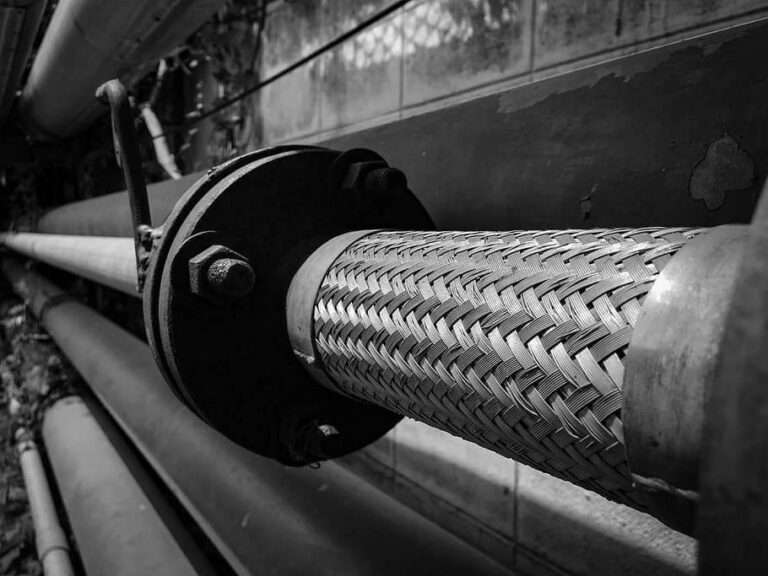

Why Pump Connectors Fail in Mechanical Rooms
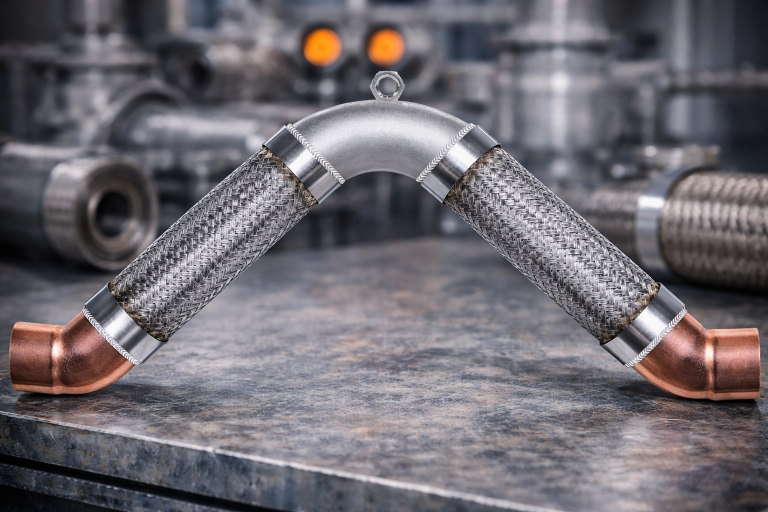
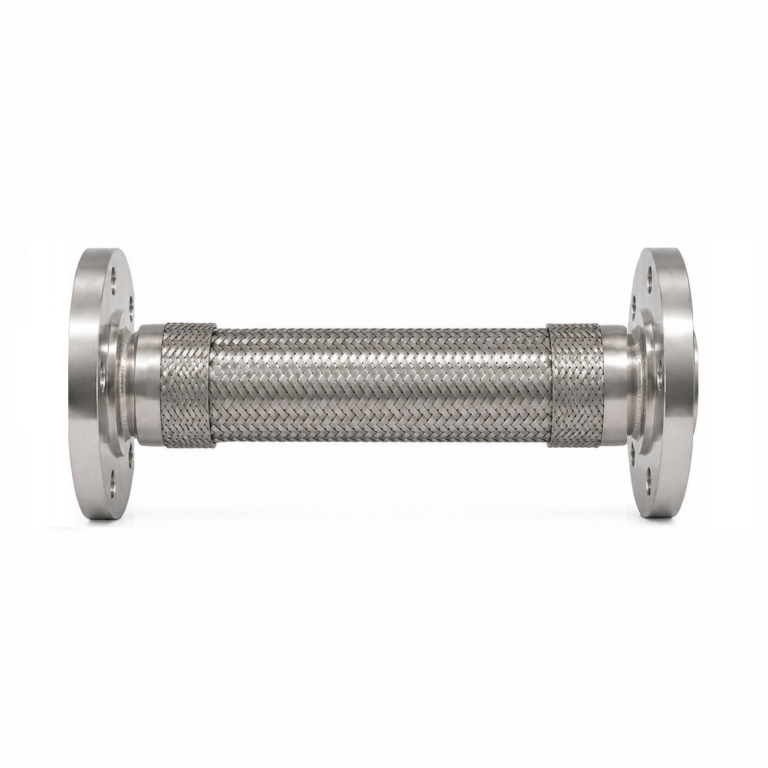
Pump connectors are designed to isolate vibration, absorb minor movement, and protect rotating equipment from piping stress. Premature failure is usually caused by installation or system design issues rather than manufacturing defects.
1. Excessive Misalignment
Flexible connectors should not be used to force piping alignment. Constant offset loading places continuous stress into corrugations, braid reinforcement, and end fittings.
2. Torsional Installation
Twisting the hose during installation creates braid fatigue and corrugation stress that significantly shortens service life.
3. Improper Anchoring
Without proper anchors, pressure thrust and thermal growth can transfer excessive loads into pumps and flexible connectors.
4. Insufficient Pipe Guiding
Unguided piping movement can create lateral displacement that exceeds allowable connector movement capability.
5. Incorrect Pressure-Temperature Selection
Mechanical systems often experience temperature swings and transient pressure conditions. Connectors must be selected using combined operating conditions.
6. Vibration Frequency Mismatch
Certain vibration conditions can amplify fatigue demand if connector geometry and live length are not properly engineered.
Best Practice
Effective pump isolation systems integrate:
- Anchors
- Pipe guides
- Flexible connectors
- Proper support spacing
- Validated movement conditions
Correctly engineered systems reduce nozzle stress, improve equipment life, and minimize vibration transfer into building piping systems.
Review the Pump Connection Before Installation
- Standard-Length Pump Connectors — review the validated flanged pump-connector path.
- Metal Hose Pressure Derating Calculator — evaluate temperature effects from validated pressure data.
- Metal Hose Length & Bend Radius Calculator — check lateral movement geometry and live length.
- Pipe Guide Layout Review — coordinate connected piping alignment and movement.
- Engineering Calculators