Seismic V-Loops vs Traditional Expansion Joints
Seismic piping systems require movement compensation strategies capable of handling lateral, vertical, and angular building displacement during seismic events. Traditional axial expansion joints and seismic V-loops address movement differently and should be selected based on the system’s operational and structural requirements.
Traditional Expansion Joints
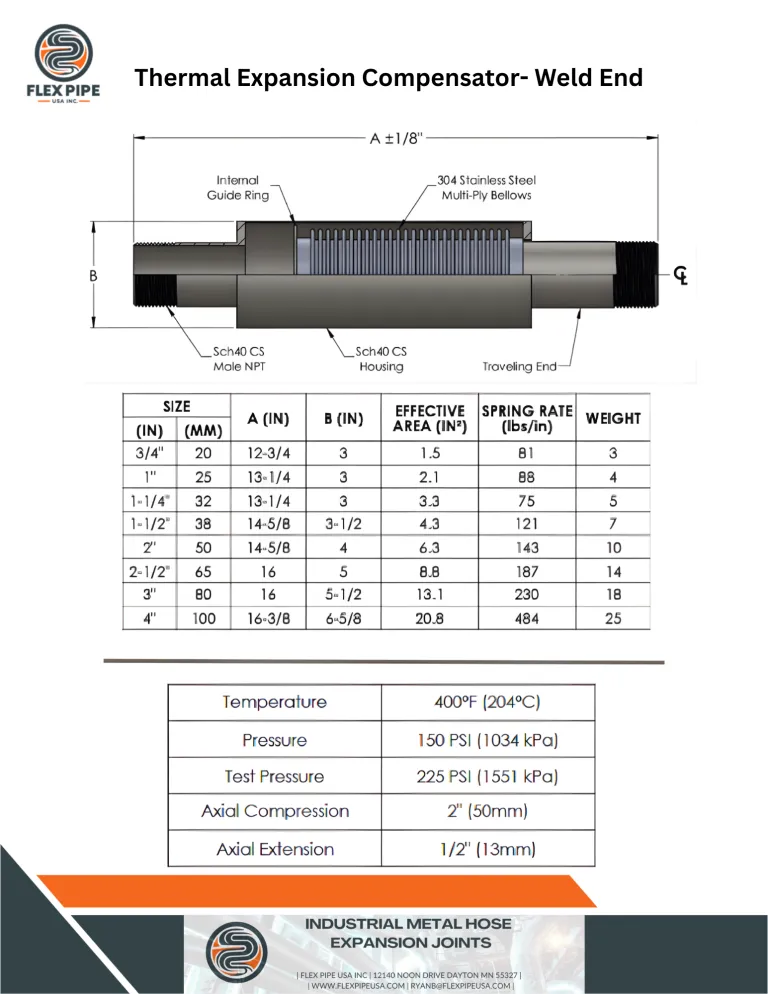
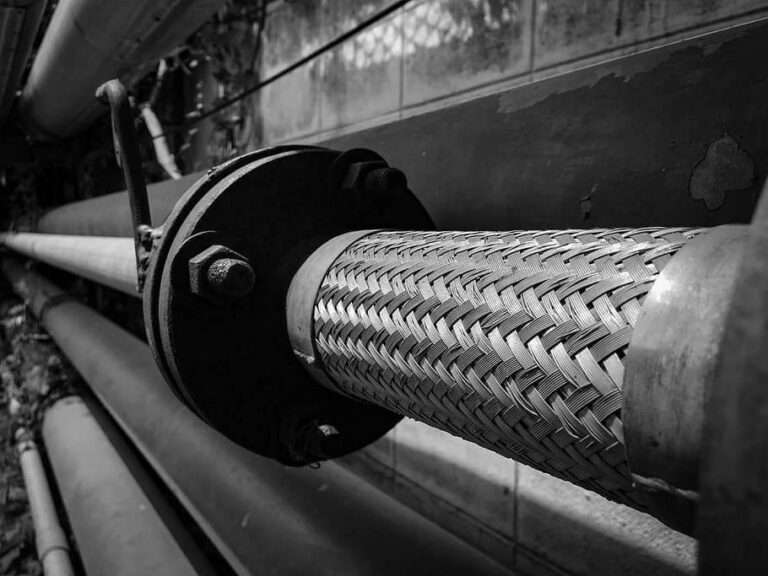
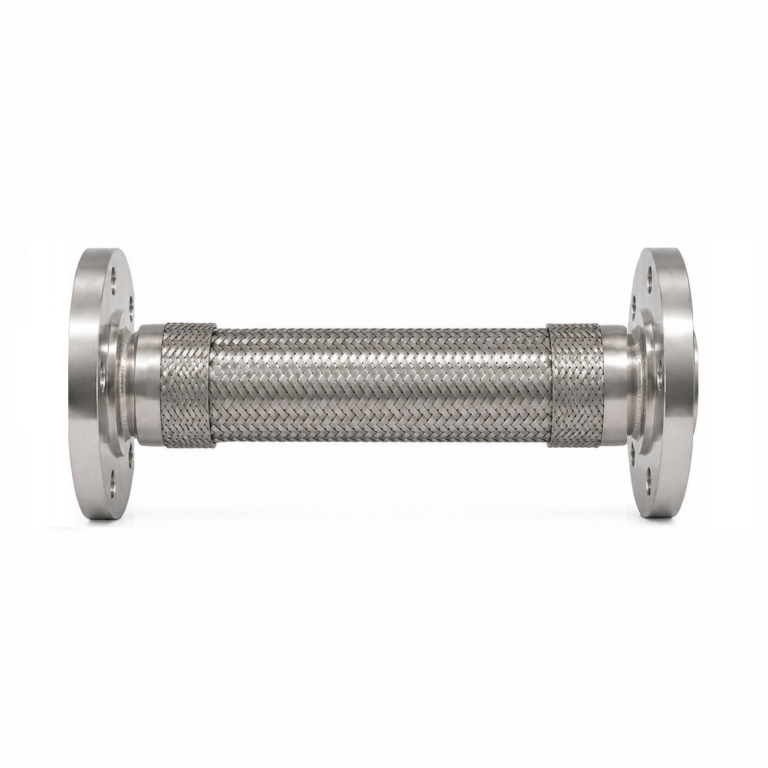
Axial expansion joints primarily absorb thermal growth along the pipe axis. They are commonly used in:
- Steam systems
- Hydronic piping
- Long straight pipe runs
- Thermal expansion compensation systems
These systems rely heavily on:
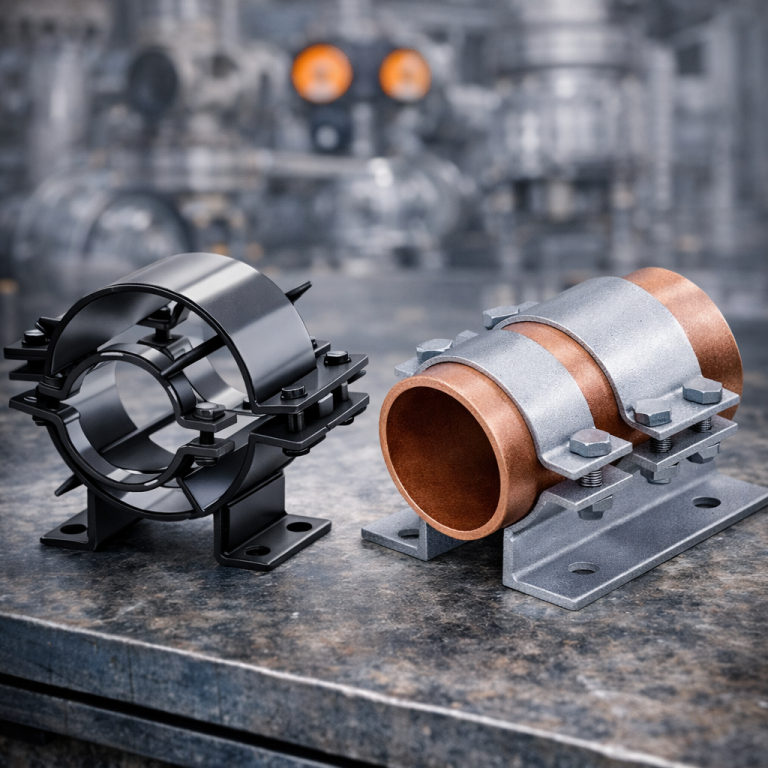
- Anchors
- Intermediate guides
- Controlled directional movement
Seismic V-Loops
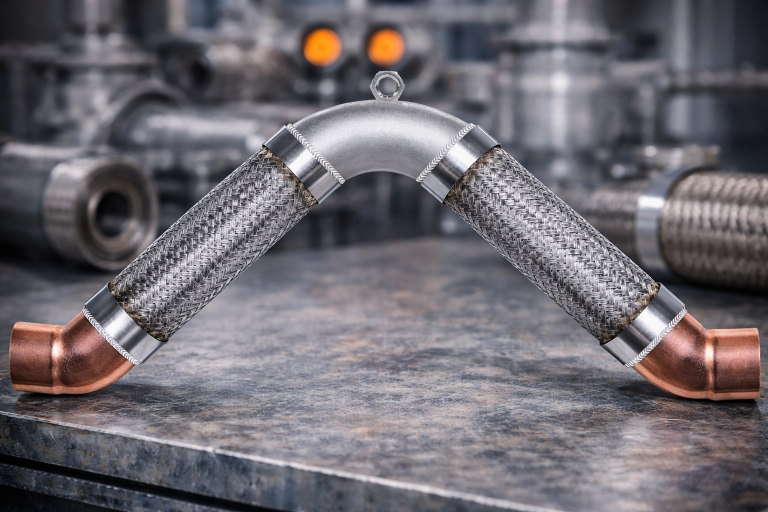
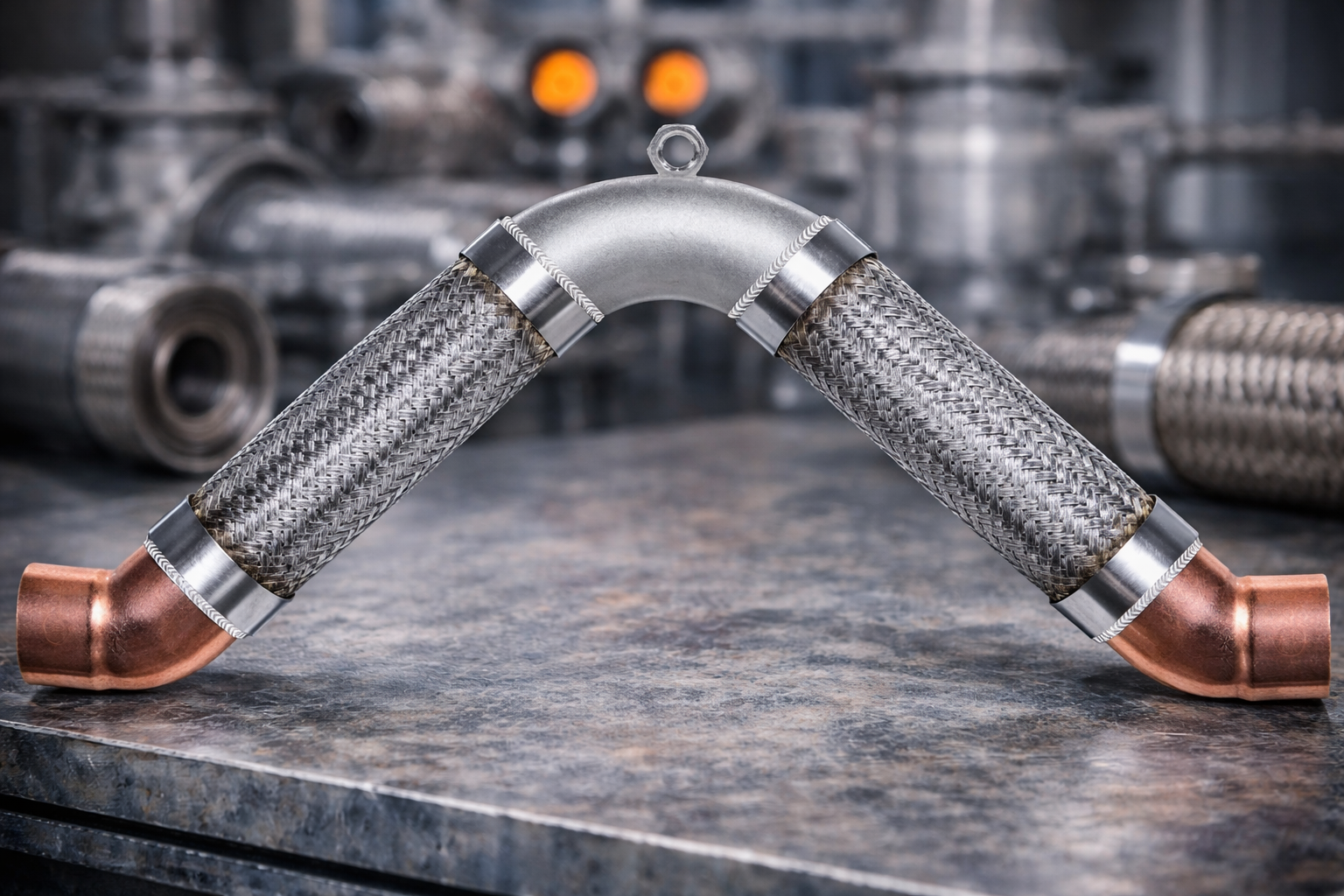
Seismic V-loops are flexible piping assemblies configured to absorb movement in multiple axes simultaneously.
They are commonly used in:
- Seismic building zones
- Hospital mechanical systems
- Critical infrastructure
- Data centers
- Industrial facilities
Advantages of V-Loops
- Multi-axis movement capability
- Reduced stress transfer into equipment
- Improved seismic flexibility
- Simplified retrofit installation potential
System Design Considerations
Both systems require proper engineering review including:
- Movement magnitude
- Pressure and temperature
- Anchor loads
- Support spacing
- Building structural displacement
Final system selection should account for both thermal and seismic movement requirements simultaneously.
Compare the Movement Systems
- Seismic Piping Data by ZIP Code — start with project location and seismic inputs.
- Seismic V-Loops — browse products intended for multi-axis movement.
- Expansion Joints — browse application-specific expansion-joint products.
- Pipe Guide & Thermal Expansion System Review — coordinate thermal movement, anchors, guides, and expansion devices.
- Engineering Calculators