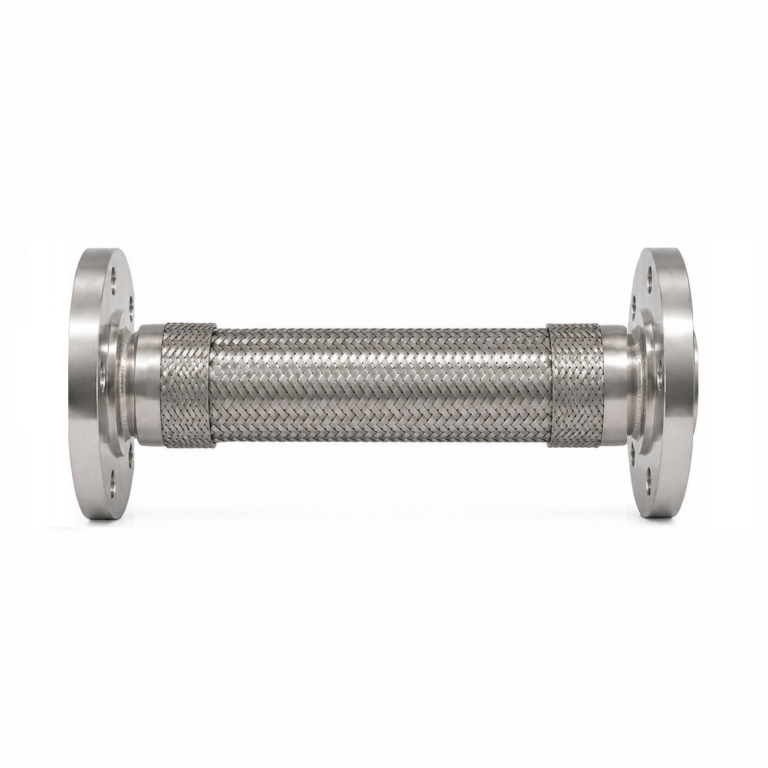

How Pipe Guides Prevent Expansion Joint Failure
Pipe guides are critical components in thermal expansion systems. Without proper guiding, piping systems can buckle, misalign, transfer excessive loads into equipment, or prematurely damage expansion joints and flexible connectors.
Purpose of Pipe Guides
Pipe guides control the direction of thermal movement while preventing lateral instability. Properly guided systems allow thermal growth to occur in predictable directions while minimizing side loading on expansion joints.
Common Failure Modes Without Guides
- Bellows squirm
- Lateral buckling
- Anchor overload
- Flange leakage
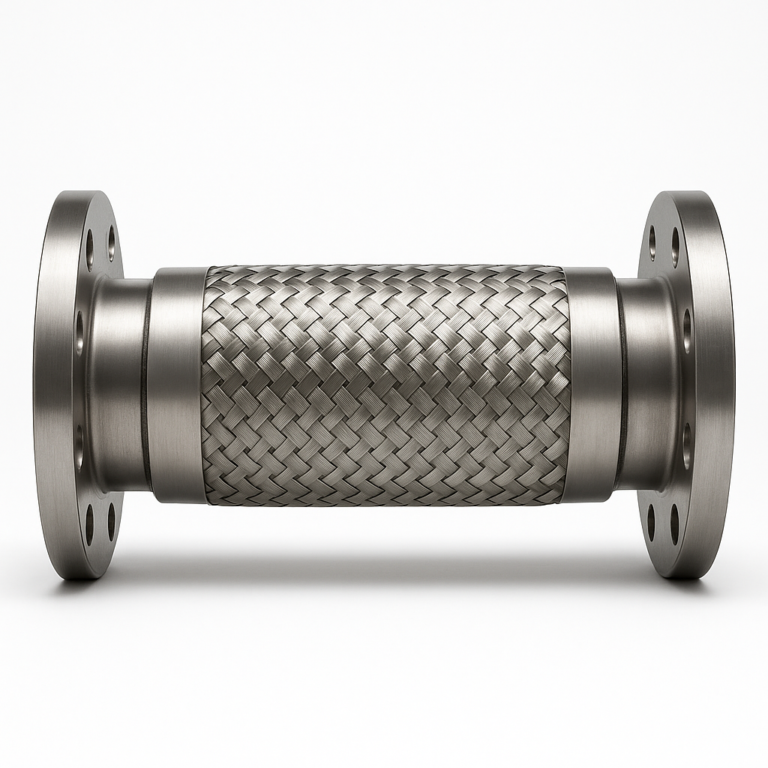
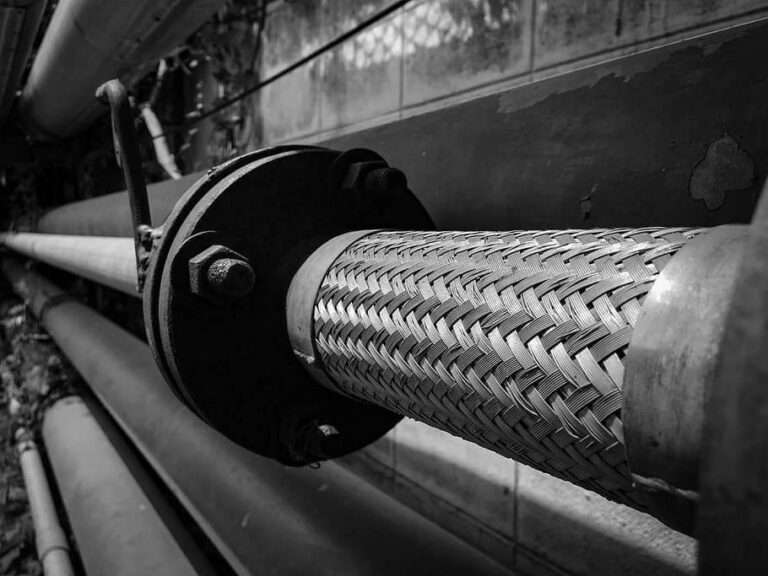
- Premature braid fatigue
- Pump nozzle stress
Guide Placement
Typical engineering practice places the first guide near the expansion joint or flexible connector, followed by intermediate guides at calculated intervals based on pipe diameter, pressure, temperature, and movement conditions.
Thermal Expansion Relationship
Total thermal movement is driven by pipe length, operating temperature, and material coefficient of expansion.
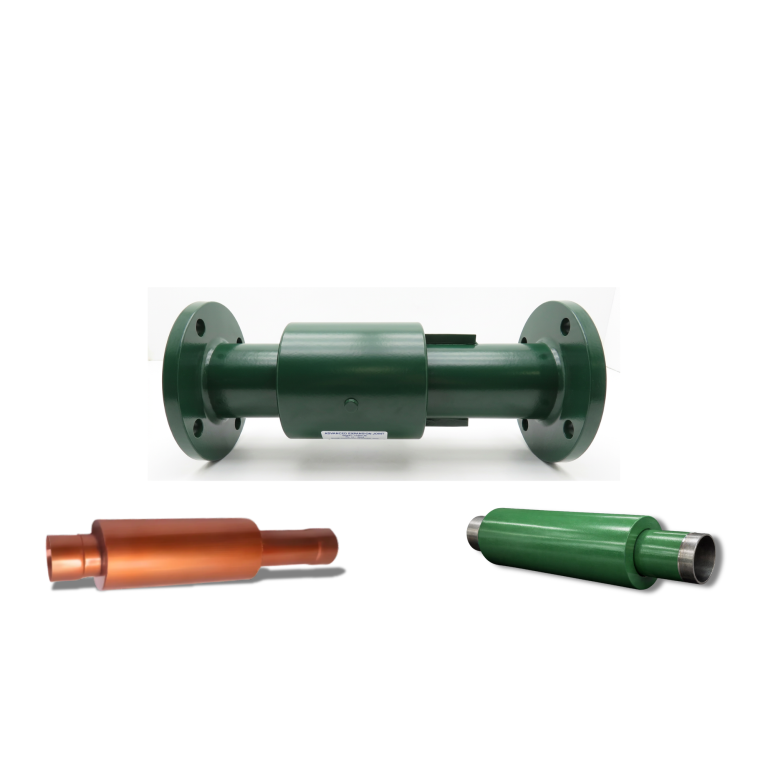
Carbon steel, stainless steel, and copper systems all expand at different rates, requiring different compensation strategies.
Integrated Movement System Design
Effective thermal movement systems integrate:
- Anchors
- Pipe guides
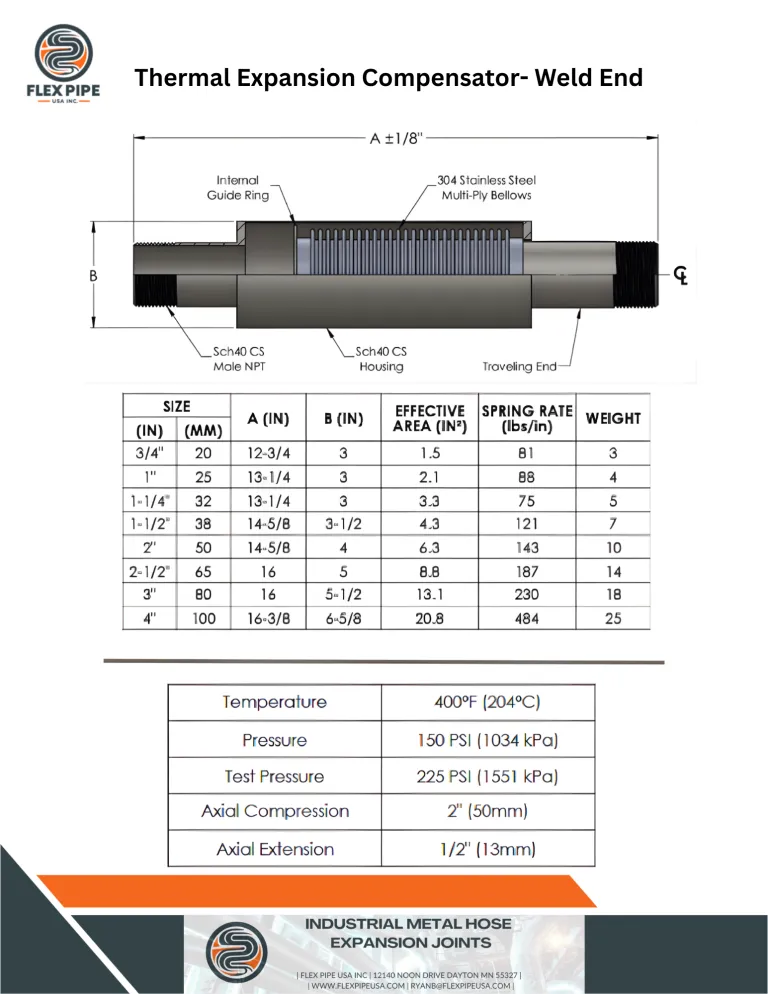
- Expansion joints
- Flexible hose assemblies
- Low-friction slide supports
When correctly integrated, these systems reduce equipment stress, improve reliability, and extend piping system service life.
Related Guide & Expansion Resources
- Pipe Guide Layout Review — prepare guide, anchor, support, and movement inputs.
- Pipe Anchor & Guide Engineering Reference — review anchor, guide, pressure-thrust, and alignment concepts.
- Pipe Alignment Guides & Slides — browse current support products.
- Expansion Joints — browse movement products that depend on a controlled piping layout.
- Engineering Calculators